

If you’re looking to transform ordinary shelves into stylish focal points, you’re in the right place. Whether you’re decorating a small apartment or refreshing a spacious home, the right shelf styling can instantly elevate your space while keeping it functional and clutter-free. This article is designed to give you practical, easy-to-follow strategies that align with your goal: creating a cozy, visually balanced home that feels both personal and intentional.
Inside, you’ll discover curated shelf display tips that blend aesthetics with smart organization, helping you showcase décor, books, and meaningful pieces without overwhelming the room. We’ve analyzed proven interior styling principles, current home décor trends, and space-saving techniques to ensure every recommendation is both beautiful and practical.
By the end, you’ll know exactly how to layer textures, balance proportions, and add character to your shelves—so your home feels thoughtfully designed, inviting, and uniquely yours.
From Storage to Showcase: The Art of Shelf Styling
Have you ever wondered why your shelves feel cluttered, even after you tidy them?
Shelves often become accidental storage units instead of intentional showcases. The shift starts with visual storytelling—arranging objects so they speak to each other. Group books by color, layer art behind ceramics, and vary heights for balance. Sound familiar?
Designers call this balance the rule of thirds—dividing space into pleasing sections. Try curated shelf display tips to mix texture, negative space, and personality. Add a quirky keepsake (yes, even that thrift-store owl) for charm right now.
The Building Blocks: Core Principles of Visual Arrangement
Great styling isn’t random—it’s strategic. First, consider The Rule of Odds. Grouping items in threes or fives tends to feel more natural and dynamic than even-numbered sets. Designers often define this as the idea that odd-numbered arrangements create visual tension, which keeps the eye engaged (a principle supported by Gestalt psychology’s theory of perception). Think of it like a trio in a band—three distinct voices, one cohesive vibe.
Next, Mastering the Visual Triangle means arranging objects of varying heights so they form an invisible triangle. This shape subtly guides the eye from high to low, left to right. Picture the way movie posters stack character heights to create drama—it’s intentional.
However, some argue symmetry feels cleaner and more orderly. True, symmetry can calm a space. Yet Achieving Balance (Not Just Symmetry) is about distributing visual weight—the perceived heaviness of an object based on size, color, or texture—so displays feel organic rather than staged.
Finally, embrace The Power of Negative Space. That “empty” area is breathing room, preventing shelves from looking like a clearance aisle. In fact, minimalism’s rise (hello, Marie Kondo era) proves less can say more.
Use curated shelf display tips wisely—and let your shelves tell a story, not shout one.
A Step-by-Step Method for Perfect Placement
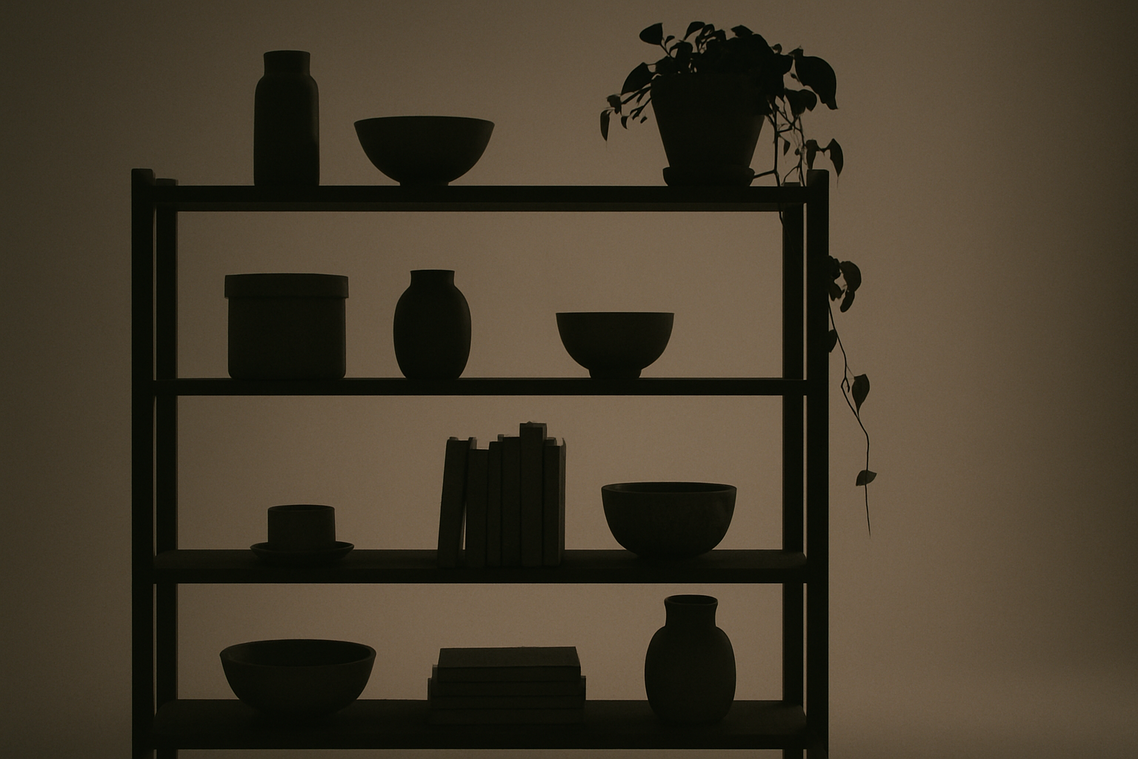
Styling shelves isn’t just about filling empty space—it’s about creating balance. Think of it as Structure vs. Clutter. When done right, the difference is instantly visible (like before-and-after home makeover reveals).
Step 1: The Clean Slate.
First, remove everything. Dust, wipe, reset. A blank shelf gives you clarity. Starting with items still in place is like painting over a half-finished canvas—possible, but messy. Clean space equals clear decisions.
Step 2: Place Your Anchors.
Next, position your largest pieces: a tall vase, framed art, or stacked coffee-table books. These “anchors” define visual structure. Compare this to building a house—without beams, the details don’t matter. Large-first styling feels intentional; small-first styling often feels scattered.
Step 3: Layer with Medium and Small Objects.
Now, introduce mid-sized décor. Overlap slightly to create depth (placing objects in front of others for dimension). Flat arrangements look staged; layered ones feel lived-in.
Step 4: Integrate Books Creatively.
Use books vertically for rhythm and horizontally as risers. Horizontal stacks elevate smaller objects—literally and visually. Books-only shelves can feel academic, while mixed styling feels curated shelf display tips in action.
Step 5: Add Life and Personality.
Finally, include plants, souvenirs, or meaningful pieces. Personality beats perfection every time. A shelf without story feels like a showroom; a shelf with story feels like home.
If you’re refining the entire room, explore how to create a home highlight wall that instantly transforms any room for added cohesion and contrast.
Pro tip: Step back between adjustments. Distance reveals imbalance faster than tweaking up close.
Advanced Techniques for a Designer-Level Display
A polished shelf rarely happens by accident. It’s usually the result of deliberate choices—edited, not crowded (yes, restraint is a design skill). Let’s compare what works versus what merely fills space.
Create a Cohesive Color Palette
Option A: Every color you love at once. The result? Visual noise. Your eye doesn’t know where to land.
Option B: Neutrals plus one accent color. Think warm whites and taupes with a single thread of deep blue. Designers often rely on limited palettes because cohesive color schemes reduce visual clutter and increase perceived harmony (a principle rooted in color theory research).
Pro tip: Repeat your accent color at least three times to create rhythm.
Mix Materials and Textures
All smooth finishes can feel flat.
Mixed textures—ceramic, wood, glass, linen— create contrast and depth. A rough wooden bowl beside a glossy vase feels intentional. Texture layering is commonly used in interior styling to prevent spaces from appearing sterile.
- Smooth ceramic
- Weathered wood
- Brushed metal
- Soft textiles
That contrast? It’s what gives shelves personality.
Tell a Thematic Story
Random objects feel disconnected.
A coastal grouping (shells, driftwood, blue glass) or a monochrome black-and-white arrangement tells a clear story. Themed styling improves cohesion because our brains naturally organize items by similarity (Gestalt principles).
Vary Shape and Form
All tall rectangles = rigid.
Mix round with square, tall with short. Visual rhythm comes from contrast—like jazz, but for décor.
If you want truly curated shelf display tips, compare each item side-by-side and ask: does this add contrast, cohesion, or clutter? If it’s clutter, edit boldly (your shelf will thank you).
Common Styling Mistakes and How to Avoid Them
The “Line-Up” Problem happens when every item sits in a straight, flat row. It feels stiff because your eye has nowhere to travel. Instead, stagger pieces slightly forward or back to create depth—depth simply means visual layers.
The “Too Small” Scale mistake comes from using only tiny objects. Scale refers to size in relation to the shelf. Anchor with one substantial piece so smaller accents feel intentional.
The “One-Note” Look appears when heights and shapes match. Vary them to add movement, a rhythm designers call visual flow. Follow curated shelf display tips.
Curate your space, and you curate your life. When shelves feel cluttered, the whole room feels unsettled. Start with these simple rules:
- Keep visual balance by mixing tall and short pieces.
- Layer art behind objects to add depth.
- Add something personal, like a travel photo or heirloom.
These curated shelf display tips turn random items into a story. Some argue minimal shelves look cleaner. True, but personality matters more than perfection. Pro tip: edit ruthlessly; if it does not spark meaning, store it. For ideas, explore design inspiration. Choose one shelf this week, experiment, and watch your space transform.
Create a Home That Feels Intentionally Yours
You came here looking for ways to make your space feel warmer, more functional, and uniquely you—and now you have the inspiration to do exactly that. From smart layouts to curated shelf display tips, you’ve seen how small, thoughtful changes can completely transform the way your home looks and feels.
A cluttered, uninspired space can drain your energy. But a cozy, well-designed home supports your routines, reflects your personality, and makes everyday living easier. The difference isn’t about spending more—it’s about styling smarter.
Now it’s time to take action. Start with one room, one shelf, or one corner. Apply the ideas you’ve discovered and build momentum from there. Thousands of home enthusiasts turn to our guides for practical, beautiful solutions that actually work—so don’t stop here.
Explore more ideas, try one update today, and turn your home into a space you truly love living in.