Your home should feel like a reflection of who you are—warm, intentional, and uniquely yours. If you’re searching for fresh interior design inspiration, smart space-saving hacks, or simple ways to elevate your everyday surroundings, you’re in the right place. This article is designed to help you transform ordinary spaces into meaningful environments that balance comfort, function, and personality.
We explore cozy living concepts, personalized aesthetics, and practical design strategies that work for real homes and real lifestyles. Whether you’re styling a small apartment, refreshing a single room, or rethinking your entire layout, you’ll find ideas that are both achievable and inspiring.
Our approach blends timeless design principles with creative insights, ensuring every suggestion is thoughtful and easy to apply. From subtle décor shifts to impactful layout changes, each tip supports you in capturing life highlights through spaces that truly feel like home.
Your Life’s Story Deserves More
We take thousands of photos each year, yet a 2023 study by Photobox found 67% of people rarely revisit them. Our biggest milestones disappear into the scroll. Memories deserve more than a swipe. This piece explores tangible ways of capturing life highlights so they become heirlooms, not forgotten files. Research from Princeton shows physical objects trigger stronger emotional recall than digital images. Consider:
- Custom wall timelines that blend photos with handwritten notes.
Move beyond basic albums. Create framed letters, milestone shadow boxes, and story-driven decor that lives with you daily. In every room.
Creative Methods for Capturing Milestones
When people talk about preserving memories, it can sound complicated or overly sentimental. In reality, capturing life highlights simply means choosing intentional, physical ways to remember meaningful moments. Think of it as storytelling through objects, scents, and places rather than just photos on your phone (which, let’s be honest, you’ll probably never scroll back to).
Below are four creative, easy-to-execute methods—each broken down so you can start today.
-
The Time Capsule Jar
First, choose a glass jar and dedicate it to a specific year or event, such as “Our First Home.” A time capsule is simply a container filled with items that represent a period in your life. Add small, ordinary objects: a spare key, a paint swatch, a café receipt, or a handwritten note about your first night there. Over time, these tiny pieces become surprisingly powerful triggers of memory (yes, even that crumpled receipt). -
The Annual “Interview” Journal
Next, create a yearly ritual. An interview journal is a notebook where you ask the same 10–15 questions on the same date each year. Questions like “What was your biggest challenge?” or “What made you proud?” reveal how perspectives shift. In other words, you’re documenting growth in real time. Pro tip: keep the questions consistent so comparisons are meaningful. -
The Scent Archive
Because scent is closely linked to memory (Harvard Health notes smell is directly connected to the brain’s emotional center), collect small vials of fragrances tied to events. Label them clearly, such as “Pine – Colorado Trip, 2023.” Later, one inhale can transport you instantly. -
The Milestone Map
Finally, display a large map and mark important places with colored pins. Add tags with dates and short descriptions. Over time, it becomes a living visual timeline—part décor, part autobiography.
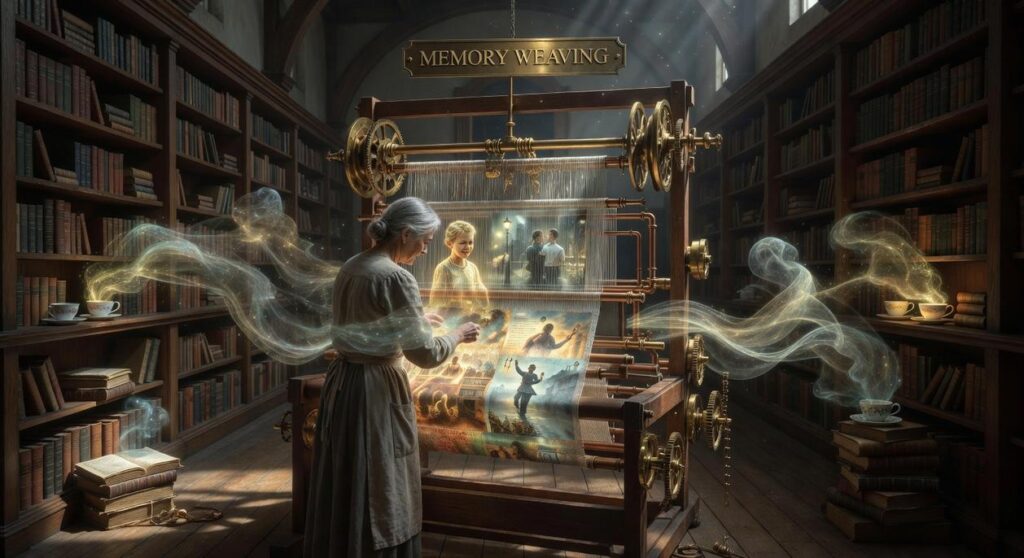
Weaving Memories into Your Living Space

A home should feel layered, not staged. Yet I’ll admit—there’s no single formula for making memories look beautiful instead of cluttered. What feels meaningful to one person can feel chaotic to another. That’s okay. Decorating with memory is personal by nature.
1. The ‘Living’ Gallery Wall
Think beyond framed photos. A living gallery wall blends traditional pictures with tactile pieces: a pressed flower from a first date, a concert ticket from the night you lost your voice singing along, or a handwritten recipe card stained with sauce (proof it was actually used). Designers often call this “mixed-media styling,” meaning you combine flat art with dimensional objects for texture and depth. The result? A wall that feels collected over time, not ordered in one click.
Some argue this can look messy. They’re not wrong. Without a consistent frame color or layout grid, things can drift visually. But structure and spontaneity can coexist—try matching frame finishes even if the contents vary.
2. Memory Boxes as Decor
Instead of hiding keepsakes, display them in aesthetic wooden or acrylic boxes. Label them simply: The Early Years, Adventures, Celebrations. It invites curiosity and conversation (and yes, a little nostalgia spiral now and then). Pro tip: limit each box to one theme so it doesn’t become a “junk drawer with a lid.”
3. The Story-Forward Bookshelf
A shelf can quietly narrate your life. Place a graduation photo beside the book that shaped your career. Add a small souvenir from a trip next to a travel memoir. This is curated storytelling—intentional placement that connects objects through meaning.
4. Space-Saving Digital Curation
Digital frames get dismissed as impersonal, but I’m not entirely convinced that’s fair. When thoughtfully organized into albums—Summer on the Lake, The College Years—they become dynamic displays. If you’re short on space, explore the ultimate guide to organizing digital memories in one place for a streamlined approach to capturing life highlights without physical clutter.
Memory-forward design isn’t about perfection. It’s about presence.
The Art of Storytelling: Making Each Moment Resonate
Memories fade faster than we think. Research from the University of California shows that people forget roughly 50% of new information within an hour and up to 70% within 24 hours (Ebbinghaus Forgetting Curve). That’s why storytelling at home isn’t sentimental fluff—it’s SMART PRESERVATION.
Annotate Everything
When you jot a date, names, and a candid note on the back of a photo, you anchor context. Psychologists call this elaborative encoding—adding detail strengthens recall. A simple line like “Sam spilled lemonade right after this” turns a static image into a living moment (and yes, future you will forget that detail).
- Write who was there
- Add the exact date
- Include one honest memory
Voice Notes for the Future
A 60-second voice memo captures tone and emotion text can miss. Studies in autobiographical memory show sensory cues—like hearing your younger voice—trigger stronger emotional recall. It’s the fastest way to practice capturing life highlights without pressure.
The ‘One-Sentence-a-Day’ Journal
Skeptics say one sentence isn’t enough. But longitudinal journaling studies suggest consistency beats volume. ONE LINE A DAY compounds into 365 vivid snapshots a year. Pro tip: write it before bed to improve reflective clarity.
Small rituals. Big resonance.
You now have a toolkit of simple, creative ways to honor your journey. The real risk? Letting favorite photos fade into digital dust on a forgotten hard drive.
Consider two paths:
- A life archived passively in cloud folders
- A life intentionally displayed through journals, framed prints, and capturing life highlights in everyday spaces
Option A stores data. Option B tells a story. One is convenient; the other is meaningful (and far more comforting on a hard day).
By preserving moments deliberately, you enrich routines and build a tangible legacy. Choose one idea. Start with one memory today. Beginning is everything.
Whether you’re documenting cherished memories with friends or exploring creative ways to showcase your adventures, platforms like Homiezava offer fantastic tools to help you share those life highlights in a truly meaningful way.
Bring Your Space to Life with Meaningful Design
You came here looking for fresh inspiration to turn your home into a place that feels warm, functional, and uniquely yours. Now you have practical ideas, creative direction, and smart strategies to transform any room—no matter the size—into a space that truly reflects your lifestyle.
A home that feels cluttered, uninspired, or disconnected from your personality can quietly drain your energy every day. You deserve better than rooms that don’t serve you. With thoughtful design choices, clever space-saving hacks, and a focus on capturing life highlights, your home can become a place that supports your routines and celebrates your story.
The next step is simple: start small. Choose one room, one corner, or even one shelf and apply what you’ve learned today. Experiment with layout, textures, and personal touches that spark comfort and joy.
If you’re ready to eliminate design overwhelm and finally create a cozy, intentional space you’re proud of, explore more expert-backed ideas and proven home styling tips trusted by thousands of inspired readers. Don’t settle for “good enough.” Start redesigning your space today and turn your home into the sanctuary you’ve been wanting.

 Connielanie Gibson writes the kind of everyday space-saving hacks content that people actually send to each other. Not because it's flashy or controversial, but because it's the sort of thing where you read it and immediately think of three people who need to see it. Connielanie has a talent for identifying the questions that a lot of people have but haven't quite figured out how to articulate yet — and then answering them properly.
They covers a lot of ground: Everyday Space-Saving Hacks, Curious Insights, Interior Design Inspirations and Layouts, and plenty of adjacent territory that doesn't always get treated with the same seriousness. The consistency across all of it is a certain kind of respect for the reader. Connielanie doesn't assume people are stupid, and they doesn't assume they know everything either. They writes for someone who is genuinely trying to figure something out — because that's usually who's actually reading. That assumption shapes everything from how they structures an explanation to how much background they includes before getting to the point.
Beyond the practical stuff, there's something in Connielanie's writing that reflects a real investment in the subject — not performed enthusiasm, but the kind of sustained interest that produces insight over time. They has been paying attention to everyday space-saving hacks long enough that they notices things a more casual observer would miss. That depth shows up in the work in ways that are hard to fake.
Connielanie Gibson writes the kind of everyday space-saving hacks content that people actually send to each other. Not because it's flashy or controversial, but because it's the sort of thing where you read it and immediately think of three people who need to see it. Connielanie has a talent for identifying the questions that a lot of people have but haven't quite figured out how to articulate yet — and then answering them properly.
They covers a lot of ground: Everyday Space-Saving Hacks, Curious Insights, Interior Design Inspirations and Layouts, and plenty of adjacent territory that doesn't always get treated with the same seriousness. The consistency across all of it is a certain kind of respect for the reader. Connielanie doesn't assume people are stupid, and they doesn't assume they know everything either. They writes for someone who is genuinely trying to figure something out — because that's usually who's actually reading. That assumption shapes everything from how they structures an explanation to how much background they includes before getting to the point.
Beyond the practical stuff, there's something in Connielanie's writing that reflects a real investment in the subject — not performed enthusiasm, but the kind of sustained interest that produces insight over time. They has been paying attention to everyday space-saving hacks long enough that they notices things a more casual observer would miss. That depth shows up in the work in ways that are hard to fake.