

Your home should feel like a reflection of who you are—but with endless trends, aesthetics, and décor advice online, it’s easy to feel overwhelmed. If you’re here, you’re likely trying to discover your home decor style and create a space that feels cohesive, comfortable, and uniquely yours. This article is designed to guide you through that process with clear insights, practical tips, and inspiring ideas you can actually use.
We’ve explored a wide range of interior design principles, cozy living concepts, and space-saving strategies to bring you advice that works in real homes—not just in perfectly staged photos. Whether you’re drawn to minimalist calm, rustic warmth, modern elegance, or eclectic charm, you’ll find actionable guidance to help you define your preferences and bring them to life.
By the end, you’ll have a clearer vision of your aesthetic and the confidence to transform your space into a home that truly feels like you.
Your home’s story doesn’t begin with a paint swatch; it begins with you.
I’ve made the mistake of copying showroom-perfect spaces, only to feel like I was living in someone else’s catalog.
Pretty doesn’t always mean personal.
When clients feel overwhelmed, it’s usually because they skip three crucial steps:
- Identify the rooms where you feel most yourself.
- Notice patterns in colors, textures, and memories.
- Edit ruthlessly—comfort beats trends, every time.
Some argue trends guarantee cohesion, but I’ve learned authenticity creates harmony.
Use this framework to discover your home decor style and design with confidence, not confusion today.
Designing a home that feels right rarely starts with paint chips or Pinterest boards. Instead, begin with your personal style compass.
First, look in your closet. The colors, textures, and patterns you reach for year after year reveal your visual comfort zone. If your shelves lean toward neutral linens and soft knits, you may crave calm, breathable spaces. On the other hand, if bold prints and sharp tailoring dominate, your taste might skew structured and expressive. (Yes, your favorite jacket counts.)
Next, analyze your daily routines. Back in 2020, when many of us worked from home, functionality became nonnegotiable. A layout built for quiet reading differs from one meant for lively dinners. Function anchors aesthetic; without it, even the prettiest room feels off.
Finally, consider your favorite feelings. Think about places where you’ve felt most at ease or inspired. Perhaps a rustic cabin grounded you, while a sleek hotel energized you. Identify those emotions and trace them back to materials, light, and layout.
Over time, patterns emerge, helping you discover your home decor style with clarity. Give yourself a weekend to reflect before making changes; insight grows surprisingly fast. Trust what consistently feels like you. Always prioritize comfort first. There.
Gathering Inspiration Beyond Pinterest
Pinterest is convenient. It’s fast, visual, and endlessly scrollable. But some argue it creates copycat rooms—spaces that look polished yet oddly impersonal (you’ve seen that same beige sofa before). If every mood board starts the same way, it’s no surprise so many homes end up feeling identical. True inspiration often lives offline.
Inspiration from Nature
Nature offers color theory in real time. The gradient of a sunset, the rough texture of tree bark, or the muted blues of a coastline can shape an entire room. Designers often reference biophilic design—an approach that integrates natural elements to improve well-being (Kellert, 2018). Skeptics may say translating a landscape into décor feels abstract. But when you pull specific tones or materials, the result feels grounded, not gimmicky.
Clues from Hobbies and Passions
Your interests are visual clues. A love of books can evolve into a library wall; gardening might inspire layered greens and botanical prints. Some people worry themed spaces feel childish. The difference is restraint. Curate, don’t costume.
Travel and Culture
Architecture and art from places you admire can guide your palette. The tilework of a Spanish courtyard or the minimalism of a Japanese inn (think Kyoto ryokan serenity) offers distinct cues. Extract elements, not entire replicas.
The Power of a ‘Curiosity Cabinet’
Create a physical or digital collection of textures, fabrics, and images—no overthinking. This raw archive helps you discover your home decor style organically. For guidance on blending eras thoughtfully, explore mixing vintage and modern creating a personalized look.
Translating Feelings into Design Language
Design isn’t just decoration—it’s translation. You’re turning emotions into visuals. When you discover your home decor style, you’re really deciding how you want a room to feel versus how you want it to function.
Color Palette Creation
Choose 3–5 core colors:
- Primary color: the dominant shade anchoring the room
- Secondary color: supports and balances
- Accent color: small, high-impact pops
Think of it as Mood A vs Mood B. A calm retreat might pair warm beige (primary) + sage (secondary) + muted gold (accent). An energized space? Navy (primary) + crisp white (secondary) + electric orange (accent). One whispers; the other walks in like it owns the place (and maybe brings coffee).
Texture and Material Selection
Feelings translate directly into materials.
- Cozy vs Sleek
- Cozy: chunky knits, soft velvets, warm woods
- Sleek: polished metals, glass, lacquered finishes
Velvet absorbs light and softens a room. Glass reflects it and sharpens edges. Same layout, entirely different vibe.
Defining Shapes and Lines
Curves vs straight lines dramatically shift energy.
- Organic curves: relaxed, welcoming, conversational
- Clean lines: structured, modern, efficient
Rounded sofas feel inviting; angular sectionals feel intentional and bold.
Space-Saving Hacks for Any Aesthetic
Minimal vs layered styling both benefit from smart storage. Multi-functional furniture (like storage ottomans or fold-out desks) keeps clutter hidden so your aesthetic stays clear. Pro tip: if every item doesn’t have a “home,” the room won’t feel like one.
The Litmus Test: Creating Your Mood Board
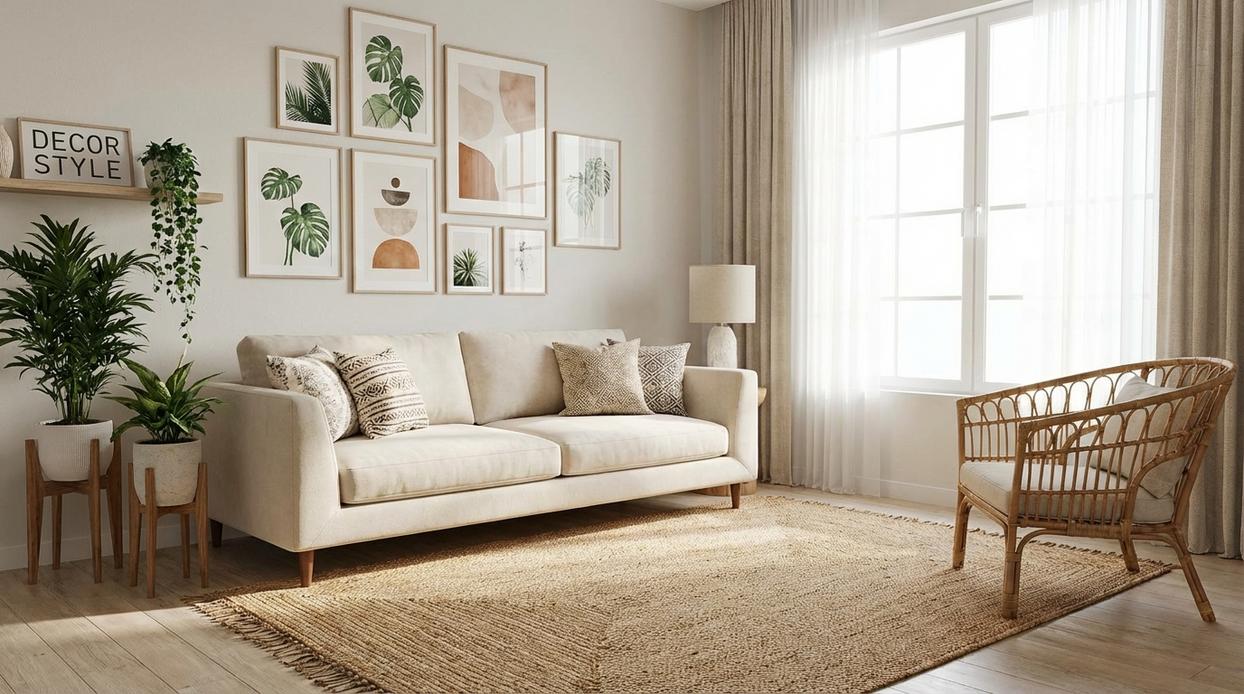
A mood board is a low-stakes way to test colors, materials, and furniture before spending a dime. Think of it as a rehearsal dinner for the living room (no awkward speeches required). Digital boards using Canva or Pinterest are fast, flexible, and easy to share. Physical boards let you feel textures and compare fabric swatches in light—crucial for avoiding beige-on-beige regret.
To edit, aim for cohesion:
- Remove anything that disrupts the vibe.
If it doesn’t feel like a snapshot of ideal room, cut it. Next, refine and discover your home decor style.
Crafting a Home That’s Uniquely Yours
Now, instead of drifting through endless trends, you have a clear, repeatable path forward. When you discover your home decor style, you gain more than a pretty room—you gain confidence in every choice, from paint colors to throw pillows. As a result, the overwhelm fades and decision-making becomes energizing, not exhausting.
Better yet, this framework is rooted in you. That means your space won’t feel outdated next year or like a showroom copy. It will feel personal, layered, and lasting. So why wait? Start with one room, build your mood board, and watch clarity turn into a home you truly love.
Create a Home That Finally Feels Like You
You came here looking for clarity, inspiration, and practical ideas to shape a home that truly reflects your personality. Now you have the tools, concepts, and confidence to move forward with intention. No more second-guessing your layout, overbuying decor that doesn’t fit, or feeling like your space is missing something.
The frustration of living in a home that feels disconnected or cluttered is real. Your space should recharge you, not overwhelm you. With the right design approach, thoughtful styling choices, and smart space-saving techniques, you can transform even the smallest corners into something meaningful and functional.
Now it’s time to take action. Start small. Rework one room. Rearrange what you already own. And most importantly, discover your home decor style so every future decision becomes easier and more intentional.
If you’re ready to stop guessing and start creating a space that feels warm, cohesive, and completely yours, explore more cozy living ideas and design inspirations today. Thousands of readers turn to us for practical, beautiful solutions—join them and begin transforming your home now.