If you’ve ever wondered why some homes feel calm and airy while others feel vibrant and full of personality, you’re really exploring the psychology behind design choices. This article dives into minimalism vs maximalism psychology—not just as aesthetic trends, but as reflections of how we think, feel, and live in our spaces. Whether you’re trying to declutter or craving bolder expression, understanding the mindset behind each style can help you create a home that truly supports your well-being.
We break down how minimalism can promote clarity, focus, and emotional ease, while maximalism often celebrates identity, creativity, and comfort through abundance. Drawing from established design principles, behavioral insights, and real-world interior trends, this guide connects visual choices to psychological impact. By the end, you’ll have a clearer sense of which approach aligns with your personality—and how to apply it thoughtfully to your own space.
Your Home, Your Mind
Our homes confess what we rarely say out loud. Some people swear clutter is chaos; others insist blank walls feel like a waiting room. I believe neither camp is wrong—just wired differently.
The debate around minimalism vs maximalism psychology boils down to two needs:
- Cognitive ease: fewer objects, fewer decisions (your brain finally exhales).
- Identity display: layered art, books, color—proof of a life lived.
Studies link clutter to stress levels (Princeton Neuroscience Institute), yet personalization boosts well-being (Journal of Environmental Psychology).
My take? Choose the style that quiets your mind, not impress guests.
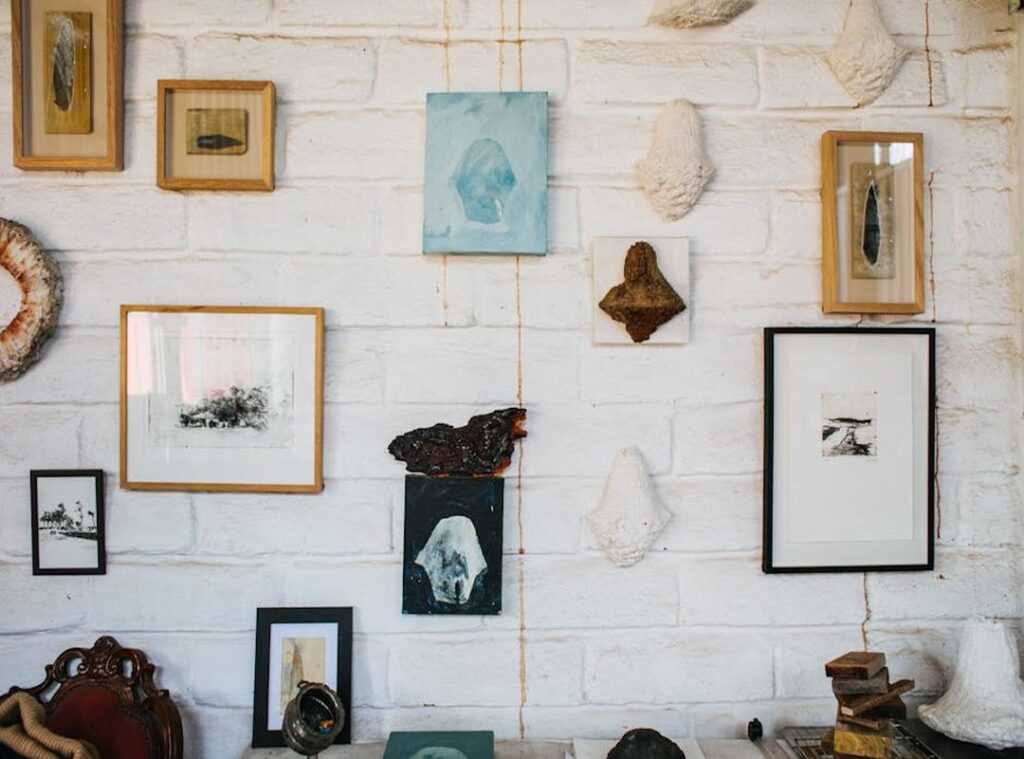
The Psychology of “Less”: Minimalism and the Pursuit of Clarity
At its core, minimalism works because of Cognitive Load Theory—the idea that our brains can only process a limited amount of information at once (Sweller, 1988). Every object in your space competes for attention. Fewer items mean fewer visual cues, which translates to less mental strain. For example, clearing a crowded kitchen counter down to three essentials—a coffee maker, a fruit bowl, and a cutting board—instantly reduces background noise for your brain.
Then there’s the Paradox of Choice. Psychologist Barry Schwartz found that too many options increase stress and reduce satisfaction (2004). A closet packed with 40 outfits can feel overwhelming; a curated selection of 10 versatile pieces simplifies mornings. Decision fatigue shrinks, and your mental energy stays intact for more meaningful tasks. Pro tip: Try the “10-item surface rule”—limit visible items on tables or shelves to ten or fewer.
This is where minimalism vs maximalism psychology becomes practical. Minimalism emphasizes intentional selection, while maximalism embraces abundance. If your goal is clarity, intentionality wins. Choose each object deliberately. Ask: Does this serve a function or spark genuine joy?
As you assert control over your environment, anxiety often decreases and focus improves. Start small—declutter one drawer, then one room. Over time, the physical spaciousness mirrors mental spaciousness (and yes, it feels as calming as it sounds).
The Psychology of “More”: Maximalism and the Art of Self-Expression

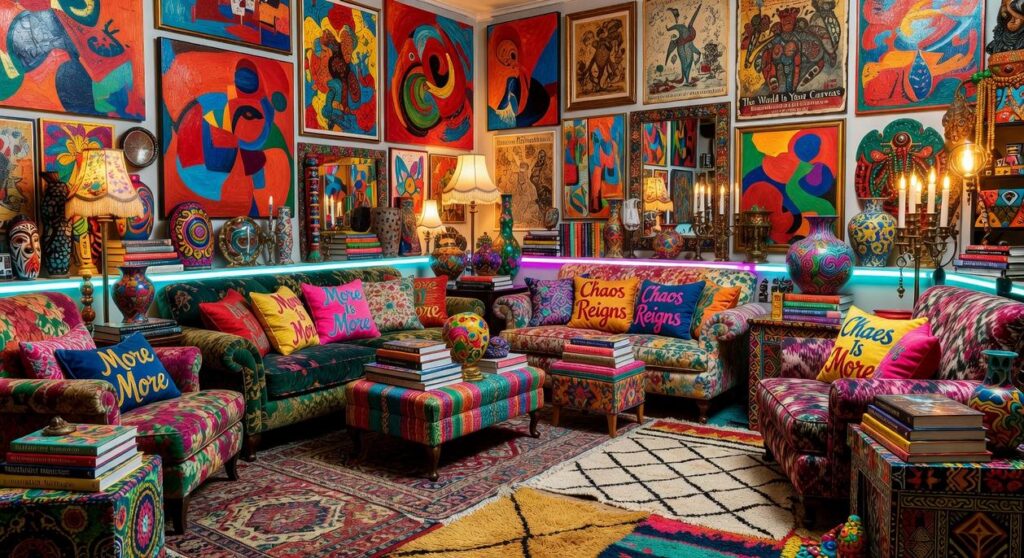
Maximalism isn’t clutter—it’s narrative. At its core, it’s the art of turning your living space into a visual autobiography. Every gallery wall, patterned throw, or flea-market find becomes a sentence in your story. In other words, your home stops being a showroom and starts being a memoir (and yes, sometimes a dramatic one).
This is where minimalism vs maximalism psychology comes into play. While minimalism often emphasizes clarity through reduction, maximalism embraces identity through abundance. The benefit? You don’t just live in your space—you see yourself reflected in it.
Moreover, maximalist interiors heighten sensory stimulation. Texture, color, scent, and sound layer together, activating memory pathways in the brain (a phenomenon psychologists link to associative recall). A vintage lamp might recall your grandmother’s house; a concert poster might echo your first road trip. According to research on nostalgia and well-being, positive reminiscence can boost mood and increase feelings of meaning in life (Routledge et al., 2013).
Just as importantly, visually rich environments can nurture creativity. Studies suggest that varied stimuli encourage divergent thinking—the ability to generate multiple ideas or solutions (Vohs et al., 2013). That means your boldly styled office corner might actually help you think bigger.
Here’s what you gain:
- Stronger personal identity anchored in your surroundings
- Emotional comfort through meaningful objects
- Enhanced creativity from layered inspiration
- Everyday joy sparked by visual storytelling
And if you’re curious how design evolved to shape our habits, explore the surprising history of everyday household design. Sometimes, more really does give you more.
A Tale of Two Brains: Focus vs. Inspiration
I’ve lived on both ends of the spectrum—and I’ve messed up with each.
When I first embraced minimalism, I stripped my space down to the bare essentials. Clean desk. Blank walls. Neutral palette. It was perfect for focus. Research from Princeton University found that physical clutter competes for attention, reducing performance and increasing stress (McMains & Kastner, 2011). And yes, my productivity soared.
But then something unexpected happened. The space felt too quiet. Too sterile. My creativity dipped. I learned that while minimalism minimizes distraction, it can also mute inspiration.
Then I swung hard the other way. Maximalism. Art everywhere. Books stacked like I was auditioning for a Wes Anderson set. It felt alive—comforting, immersive, personal. But deep work? Nearly impossible. Every object whispered for attention.
Here’s what I learned about minimalism vs maximalism psychology:
- Minimalism reduces cognitive load, supporting focus.
- Maximalism fuels emotional warmth and associative thinking.
- Both can backfire if pushed to extremes.
Minimalism soothes the fear of clutter—that drowning feeling of too much. Maximalism soothes the fear of scarcity—the anxiety of not enough.
The real mistake? Treating them as identities instead of tools. Your space should regulate your emotions, not control them (yes, even if Pinterest says otherwise).
Beyond the Labels: Finding Your Personal Equilibrium
Back in 2019, stark white rooms ruled Instagram. A year later, color-drenched “cluttercore” took over. Trends swing fast—but most of us don’t. The truth? Almost no one is 100% minimalist or maximalist. That’s the myth of purity. Real homes live on a spectrum, and your goal is finding the sweet spot that feels livable on a Tuesday night (not just photo-ready on Sunday).
Psychologists often frame minimalism vs maximalism psychology as a tension between control and expression. Some argue you must pick a side to create cohesion. I disagree. Cohesion comes from intention.
Intentional maximalism means curated collections—display what you love, rotate seasonally, and group items by theme or color. Warm minimalism keeps clean lines but adds texture: linen throws, wood tones, one bold heirloom piece.
Organization matters either way. Minimalism thrives on absence; maximalism relies on clever arrangement—gallery walls, edited shelves, hidden storage (pro tip: vertical space is free real estate).
For more ideas, explore https://llbloghome.com for evolving inspiration.
Now that you recognize your preferences, it’s time to act with intention. Research from UCLA’s Center on Everyday Lives of Families found that cluttered homes elevate cortisol levels, especially in women, reinforcing how environment shapes stress. In contrast, personalized, meaningful decor has been linked to higher feelings of well-being (Journal of Environmental Psychology, 2016).
That’s where minimalism vs maximalism psychology comes in. One prioritizes cognitive ease; the other fuels stimulation and identity.
So audit your space. Does it soothe you after work, or energize you on weekends? Start small—swap lighting, edit a shelf, add texture. Design should serve your mind.
You came here trying to understand how design choices shape not just your space, but your state of mind. Now you can clearly see how minimalism vs maximalism psychology influences mood, productivity, comfort, and even decision-making at home.
If you’ve been feeling overwhelmed by clutter or uninspired by blank walls, that frustration makes sense. Your environment either supports your lifestyle—or silently works against it. Choosing the right aesthetic isn’t about trends. It’s about creating a home that feels aligned, functional, and deeply personal.
Create a Space That Finally Feels Right
Don’t let confusion about style keep you stuck in a space that doesn’t energize you. Discover cozy living concepts, smart space-saving ideas, and tailored design inspiration that brings clarity to your home decisions. Thousands of readers turn to us for practical, beautifully curated guidance that actually works.
Ready to transform your space into something that truly reflects you? Start exploring fresh ideas today and take the first step toward a home that feels intentional, balanced, and completely yours.

 There is a specific skill involved in explaining something clearly — one that is completely separate from actually knowing the subject. Charlesie Stonechoz has both. They has spent years working with interior design inspirations and layouts in a hands-on capacity, and an equal amount of time figuring out how to translate that experience into writing that people with different backgrounds can actually absorb and use.
Charlesie tends to approach complex subjects — Interior Design Inspirations and Layouts, Highlight Hub, Curious Insights being good examples — by starting with what the reader already knows, then building outward from there rather than dropping them in the deep end. It sounds like a small thing. In practice it makes a significant difference in whether someone finishes the article or abandons it halfway through. They is also good at knowing when to stop — a surprisingly underrated skill. Some writers bury useful information under so many caveats and qualifications that the point disappears. Charlesie knows where the point is and gets there without too many detours.
The practical effect of all this is that people who read Charlesie's work tend to come away actually capable of doing something with it. Not just vaguely informed — actually capable. For a writer working in interior design inspirations and layouts, that is probably the best possible outcome, and it's the standard Charlesie holds they's own work to.
There is a specific skill involved in explaining something clearly — one that is completely separate from actually knowing the subject. Charlesie Stonechoz has both. They has spent years working with interior design inspirations and layouts in a hands-on capacity, and an equal amount of time figuring out how to translate that experience into writing that people with different backgrounds can actually absorb and use.
Charlesie tends to approach complex subjects — Interior Design Inspirations and Layouts, Highlight Hub, Curious Insights being good examples — by starting with what the reader already knows, then building outward from there rather than dropping them in the deep end. It sounds like a small thing. In practice it makes a significant difference in whether someone finishes the article or abandons it halfway through. They is also good at knowing when to stop — a surprisingly underrated skill. Some writers bury useful information under so many caveats and qualifications that the point disappears. Charlesie knows where the point is and gets there without too many detours.
The practical effect of all this is that people who read Charlesie's work tend to come away actually capable of doing something with it. Not just vaguely informed — actually capable. For a writer working in interior design inspirations and layouts, that is probably the best possible outcome, and it's the standard Charlesie holds they's own work to.